
latest
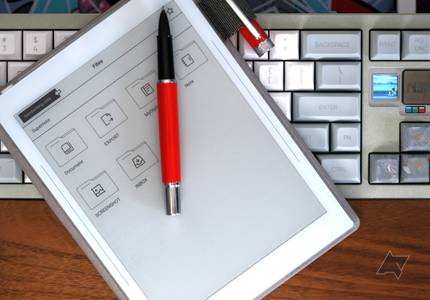
We need more purpose-built Android devices
Jack of all trades, master of none. Smartphones can do it all, but purpose-built devices can deliver unique experiences

It’s a 21st-century nightmare. Chasing the dream of having a single device that can do it all — from phone calls to text messages to social media, being the center of your multimedia and information gathering empire, and even productivity. Unfortunately, the rabbit hole of creating super devices has delivered very few, which is why some of the best tablets and smartphones today are the very definition of being a jack of all trades and master of none.


When talking about any technological hardware, the subject of batteries frequently comes up, and for good reason. Whether a device is wired or chargeable, batteries are the heart of any equipment that runs off electricity, from flashlights to satellites. Elements like Lithium are often associated with batteries, but another element is more relevant to your favorite bargain Android phones and tablets: Graphene.

California's right-to-repair act aims to guarantee access to replacement parts
Software, tools, and documentation must now be accessible years after production

In the US, California is renowned as one of the largest tech hubs in the country. However, accessibility to the products and services developed by California-based companies has been limited. Tech giants, such as Apple, have lobbied extensively to limit access to product parts that could be used in repairs. Now, California is set to pass its own right-to-repair act, which could eliminate the restrictions surrounding accessibility.

What is Starlink?
Starlink's satellites are bringing the internet to the world. Here's how they work, what they're about, and what the future holds

If you've heard the name Starlink thrown around the past few years, you may wonder what the deal is. Sure, it has something to do with satellites and Elon Musk, but the details get fuzzy after that. After all, you're not likely to use Starlink unless you're in a rural or emergency-prone area. At least, not yet.


Online privacy is a touchy subject, with all of us falling on different parts of the how-much-do-I-actually-care spectrum. In general, though, most people seem to understand that the companies whose products we use or rely on daily, like Google, Facebook, and Microsoft, are collecting a lot of data on them. The creepiness factor is real, which is why we saw things like the EU's GDPR and California's Consumer Privacy Act appear. In the wake of these, as well as some other problems, a collection of technology giants have come together to lobby for a new federal privacy law, one that returns some of the power back to them.

CES 2018 was a busy show, as usual, and so it's understandable that we let a few announcements slip through the cracks. The items in this wrap-up did not fall into the Android TV, Assistant, or Alexa "categories," so they all got lumped into their own miscellaneous one. Some of these are actually pretty neat, even if they are only mildly interesting.


Google may have just sold Motorola Mobility to Lenovo, but it seems the giant may have kept one of the manufacturer's juiciest pieces (besides patents) to itself.

Samsung Prepares For Gigabit Mobile Speeds With "5G" Millimeter Wave Band Transceiver, ETA 2020
Most mobile users these days are happy to get LTE service (and a few of us just wish we could get 3G reliably) but there is already a surprising push towards

Most mobile users these days are happy to get LTE service (and a few of us just wish we could get 3G reliably) but there is already a surprising push towards the next big thing in wireless speeds. Samsung thinks it has the solution, or at least what might become one: expanding existing LTE networks into the super-high 28GHz range, the lower part of what's known as the millimeter wave bands. The company is calling this system 5G, and expects to have it ready for cellular networks in 2020.

There's been a fundamental problem holding back the development of gadgets for the last decade or so. While processing power, storage capacity, wireless speed, and even display quality are growing at a phenomenal and steady rate, lithium ion batteries really haven't changed at all. The best that manufacturers can do is either create smaller components to make more space for the battery bay or make those components more efficient. LG Chem has created one of the first truly exciting innovations in battery tech in a long time: a Li-ion battery that's flexible enough to twist into almost any shape necessary.


If there's one downside to the proliferation of touchscreen technology, it's the lack of tactile feedback. Tactus is one of many companies that aims to alleviate this problem. This week, at SID 2012, the company demoed a product that offers disappearing physical touch keys. As seen in the demo video here, these buttons can raise on command and disappear when they're not needed. Which sounds like something out of science fiction.

How's this for amazing? You see a piece of sheet music, but you can't read it because you're a plebian, or perhaps you can read it but you want to hear it. SnapNPlay is an app that lets you take a picture of a line of sheet music and then plays back the notes on the page. This is amazing.

From climate change to mobile security, psychology to astronomy, TED talks cover some of the most important, interesting, and amazing topics from leaders of science and technology. TED is, in short, a collection of discussions from the height of human intelligence and thought. Now, more than 1200 TED talks are available on your phone or tablet. This is amazing.

You may remember way back in 2010 when Samsung first demonstrated a new flexible display technology, wowing onlookers and begging the question "what's the application?"

Looking to "help you catch up on technology news in minimal time and on your own schedule," Briox introduced Riversip to the Android Market recently. Riversip without a doubt provides a unique take on the "news reader" concept, automatically choosing news sources based on user-chosen topics, and showing only the top headlines, instead of clogging up your screen with every headline available.
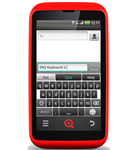

Yesterday, we saw INQ's Cloud Touch Android handset with deep Facebook integration revealed in all its socially introjected glory in an exclusive TechCrunch demo. Coming to Europe in May of this year and possibly to the U.S. after, the Cloud Touch will be taking aim at text-crazy teenagers and insomniac Facebook users who spend the better halves of their days prowling the depths of the largest social network in the world.

Qualcomm's Mirasol technology has been in prototype form for a while, but at this year's CES, it seems like we'll finally see a working product - an Android e-reader by PocketBook that is called simply Mirasol.

As if Oracle's, Microsoft's, and Apple's [1] [2] suits weren't giving Android enough headache, today, Gemalto, an Amsterdam-based digital security company, added some fuel to the flames by filing a patent infringement suit against Google and its partners HTC, Samsung, and Motorola. The suit claimed that Android and the Dalvik operating environment incorporated Gemalto's patented Java Card technology without the company's permission.