
latest
Android Auto rolls out to 6 more European countries
Belgium, Denmark, the Netherlands, Norway, Portugal and Sweden, since you asked

Read update
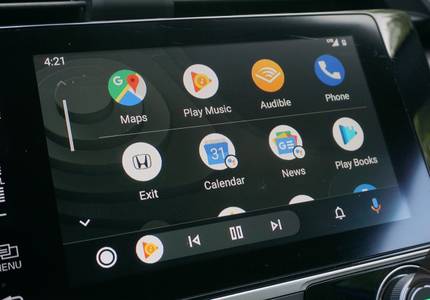
Although a bunch of cars now come with advanced navigation systems, these can rarely beat the simplicity and expansibility of Android Auto. Sadly, though, Google's in-car service isn't globally available, leaving many users unable to properly use their favorite services from their ride's dashboard. Thankfully, Android Auto is expanding to 36 more countries, making it seamless to get directions, play music, and interact with Assistant, thanks to native integration with your car's infotainment system.

Samsung's watches now support ECG monitoring in 32 more countries
It still requires a paired Samsung phone

Samsung's Galaxy Watch3 and Watch Active2 both have hardware support for ECG monitoring, but it is taking a long time to show up for everyone, since the feature has to be approved by each country's health agencies. It was exclusive to South Korea until September of last year, when it was enabled for use in the United States, and now it's coming to 32 more countries.

Google Pay adds support for 24 new banks in 23 countries
Forget your wallet, grab your phone — you've got Google Pay

Google Pay continues to expand its support to additional international banks. To help you keep track of which financial institutions have added their credit and debit cards to the service, we've compiled a list of recent additions. Since we last looked in July, Google's added 24 new banks in 23 countries.

Disney has announced that it's continuing Disney+'s international expansion in Europe. Starting today, the service will come to eight more European countries. This follows March's launch in the UK and other Western European markets. The platform also arrived in India shortly after.
Google Pay is now available for 25 new banks in 14 countries
Leave your wallet in your bag or pocket

Google Pay support is ever expanding among financial institutions, and that's both the case in the US and the rest of the world. As such, we've compiled a list of the latest international banks that have added their credit and debit cards to Google's contactless payment service, coming in at a total of 25 institutions across 14 (mostly European) countries.
Google Pay gains support for 29 new banks and financial institutions in 22 countries (Update: 11 more banks)
Because carrying a wallet is so over
Read update
Google Pay is compatible with a wide range of cards from various institutions around the world. Sadly, there are still a bunch of them that don't work with the contactless payment service. Thankfully, it is constantly gaining support for new banks and financial institutions, including the below 29, spread across 22 countries.


Read update
- OnePlus has posted a more complete statement to its forums, indicating that the layoffs aren't quite as extensive as rumored. According to the company, a total of 20 total employees are affected by the company's restructuring in Europe:
OnePlus has reportedly made severe staffing cuts in its European operations. While the tech brand has experienced massive growth in other markets over the past few years, it has also faced major headwinds across the continent in the same time which have led to previous rounds of layoffs.
Read update
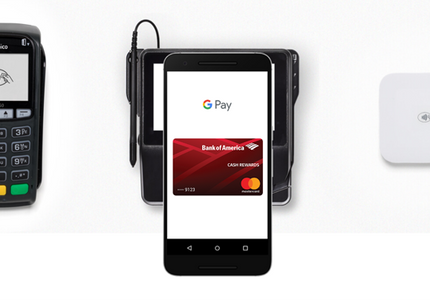
Google Pay already supports a plethora of credit cards from a multitude of banks all over the world, but there are still many institutions left that don't work with Google's payment system. It's great to see that the number of compatible banks is rising internationally, and today, we can report a whopping 62 newly added banks — though about half of these are savings banks located in Denmark.


Given the sheer amount of cars that now support Android Auto, you might be surprised to learn that the in-car software isn't actually supported everywhere. Today there are 40 countries that Android Auto is officially available in, with four of those added today and four added late last year.

I'm a huge fan of mobile payments, mostly because it's convenient and I don't have to take my wallet with me to run small errands. Seeing Google Pay expand to more countries is always pleasant, especially when the services added include prepaid cards in addition to traditional banks. The list of supported services has further grown since our last post, as Google Pay now supports 25 more services in 14 countries in Europe, Asia, and Australia.To make it easier to read, we're sorted the new services and banks by country so you can find whether your financial institution has recently signed a partnership with Google Pay:


Google Pay users in the States have a pretty nice thing going for them, with the service supported by umpteen million financial institutions (give or take a million). But as we travel abroad, the situation's much more hit-and-miss. It's far from a sure thing that Google Pay is available in a country at all, and even where it is, the selection of partner banks can be pretty sparse. So today we're happy to share with you some progress towards remedying that situation, as new banks come online for Google Pay around the globe.


There are many digital ways to consume our photos and memories these days — browsing on our phones, casting to a large TV, showcasing on a Smart Display like the Google Home Hub — but if you want physical copies of your pics to flip through and enjoy, you will need to print them. Google Photos offers a photo book service in several countries, and now it's expanding to 14 more in Europe.
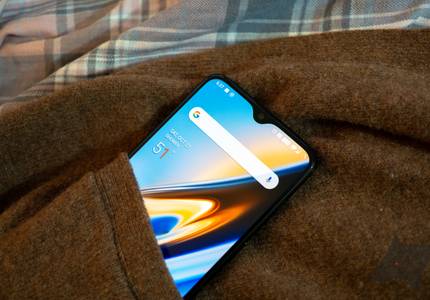

With its latest phone, OnePlus has graduated from 'flagship on a budget' to be a true contender for the best smartphone around. Check out Ryne's review if you don't believe me. Open sales started in the US several days ago, but it's now available to buy in Europe too.

Google Pay is continuing its expansion to various countries around the world. Today marks its official landing in four new nations in the Nordics: Denmark, Finland, Norway, and Sweden. With these additions, Google's mobile payment service is now available in 25 countries total.

Up until recently, the Google Wifi router and mesh network system was only available in 7 countries on the Google Store: Australia, Canada, France, Germany, New Zealand, the UK, and the USA. The country availability support page of Google even officially attests to that. But Google Wifi is now up for sale in 5 more countries, mostly from Northern Europe.


Finnish customers who send money to DNA each month will soon have the option to add Play Store purchases to their bill. The mobile provider has announced that it's launching support for Google Play carrier billing today.


Google is often accused of having a heavy focus on the United States. That's certainly true, but come on - it's a US company. Nobody seems to mind that Samsung sells a ton of phones in South Korea, or that Japan gets the newest and hottest Canon cameras before anyone else. Can you really blame a company with limited hardware resources for prioritizing a new product launch in certain markets?

Google has an odd definition of "soon." For example, five of the countries that just received access to Google Play gift cards were first told that they were coming "soon" almost five months ago, and the last one has been waiting a further six weeks. Oh well, I suppose it's best not to look a gift card in the mouth. Belgium, Denmark, Finland, Ireland, Norway, and Sweden have been added to Google's gift card system, and merchants should have gift cards in stock well before Christmas.

Update, December 16th: Google Play gift cards are now available in all five countries. Good things come to those who wait.

To all the people who wished, begged, or pleaded for Nokia to make Android phones, listen up, because it looks like your dreams may actually come true. On the day that Microsoft bought out Nokia's phone business, the Finnish company's former Asia-Pacific CEO Thomas Zilliacus founded Newkia in hopes of producing the Android phones that Nokia wouldn't commit to, and he plans to hire Nokia employees who were interested in developing for Android.